


What can an industrial engineering graduate earn in South Africa when entering the workplace?
A payslip shared on the Life Reset With Boni TikTok channel shows an industrial engineering graduate earning a basic salary of R22,904 per month, with no years of work experience indicated in the video. The payslip shows total deductions of R3,013.17 and a net pay of R19,890.83.
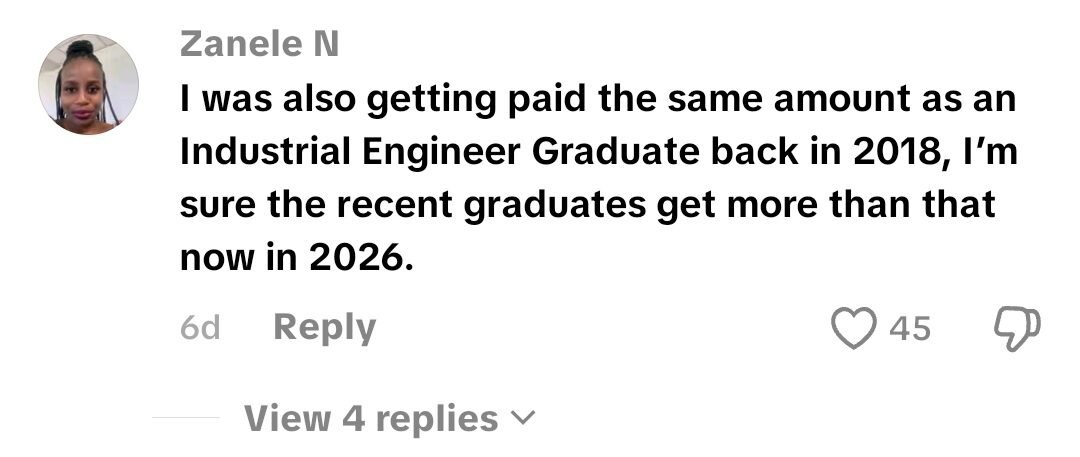
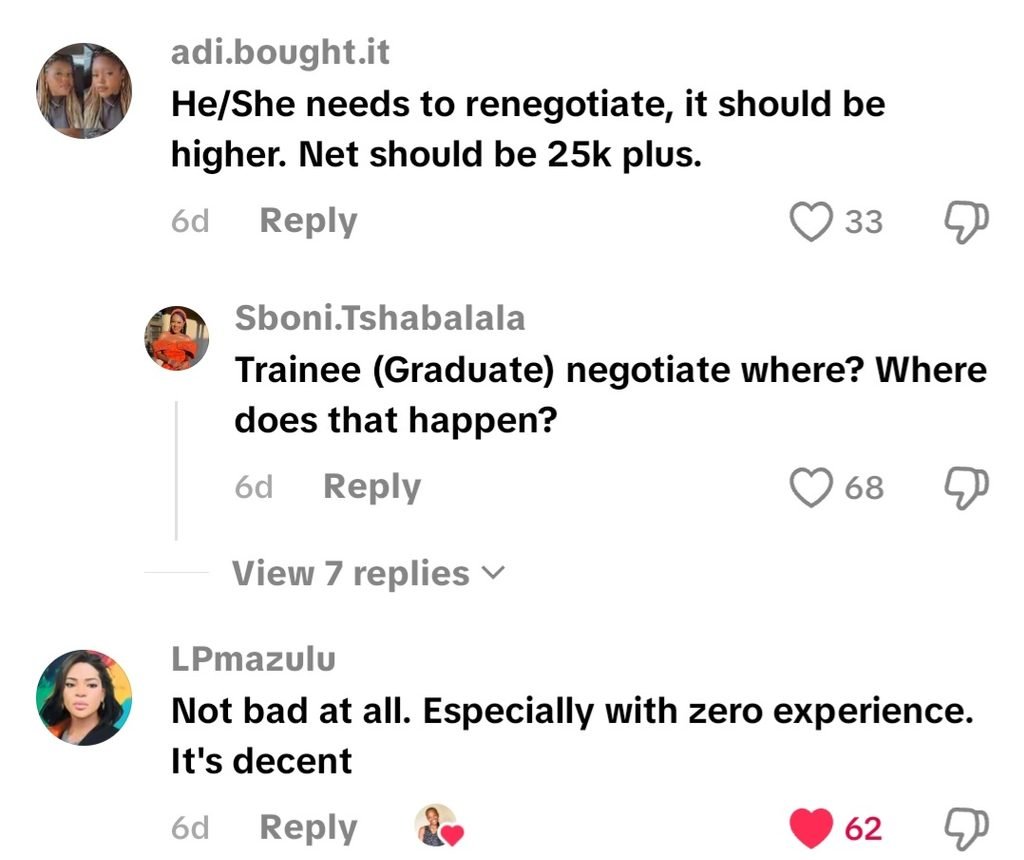
The salary prompted a lively debate in the TikTok comments, with viewers divided over whether R22,904 is a good starting salary for an industrial engineering graduate in South Africa. Some described the amount as a good graduate salary, while others argued that an industrial engineer should be earning considerably more.
One commenter said the salary was fair because the graduate had no experience, while another suggested that the graduate should be earning at least R10,000 more. Another commenter shared that they had received a similar amount as an industrial engineering graduate back in 2018, raising the question of whether graduate engineering salaries have kept pace with the cost of living and the value of the qualification
The Salary Breakdown
| Item | Amount |
| Basic Salary | R22,904 |
| Deductions | R3,013.17 |
| Netpay | R19,890.83 |
The figures are based on the payslip shared in the video and should be viewed as one reported graduate salary example, rather than the standard salary for every industrial engineering graduate.
What does an industrial engineer do?
Industrial engineering is about improving the way organisations work. Industrial engineers can work on areas such as the following:
- improving production processes
- reducing waste and unnecessary costs
- analysing systems and workflows
- improving productivity
- managing resources
- quality control
- supply chains and logistics
- using data to improve decision-making
This makes industrial engineering relevant across several industries rather than limiting graduates to one type of workplace.
Why does this matter for graduates?
For students choosing a qualification, salary is obviously one consideration, but it shouldn’t be the only one. An industrial engineering qualification can provide a foundation for careers where technical knowledge, analytical thinking and problem-solving are valuable. The bigger question for a graduate is what they do with that qualification. A degree can open the door, but practical experience, communication skills, problem-solving ability and the ability to work in a real organisation can determine how far someone progresses.
Is R22,904 a typical industrial engineering graduate salary?
We wouldn’t make that claim based on one example. This is one reported salary and shouldn’t be presented as the national average or guaranteed starting salary for industrial engineering graduates. Graduate salaries can differ substantially between employers and industries. A graduate working in manufacturing, consulting, logistics, mining or another sector could potentially encounter a very different offer. That’s why salary examples like this are useful, not because they tell us exactly what everyone will earn, but because they give graduates something tangible to compare against when researching career options.

Key takeaways
The R22,904 basic salary provides one real-world example of what an industrial engineering graduate may be offered when entering the workplace, but it should not be treated as a standard graduate salary. Prospective students should look beyond one salary figure. Research the qualification, understand the industries that hire industrial engineers, investigate graduate programmes and internships, and find out what skills employers are actually looking for.
Looking for more salary insights? Check this video below!
You can email boni@liferesetwithboni.com to submit your payslip with the following details: years of experience, qualifications, industry and the job title.